
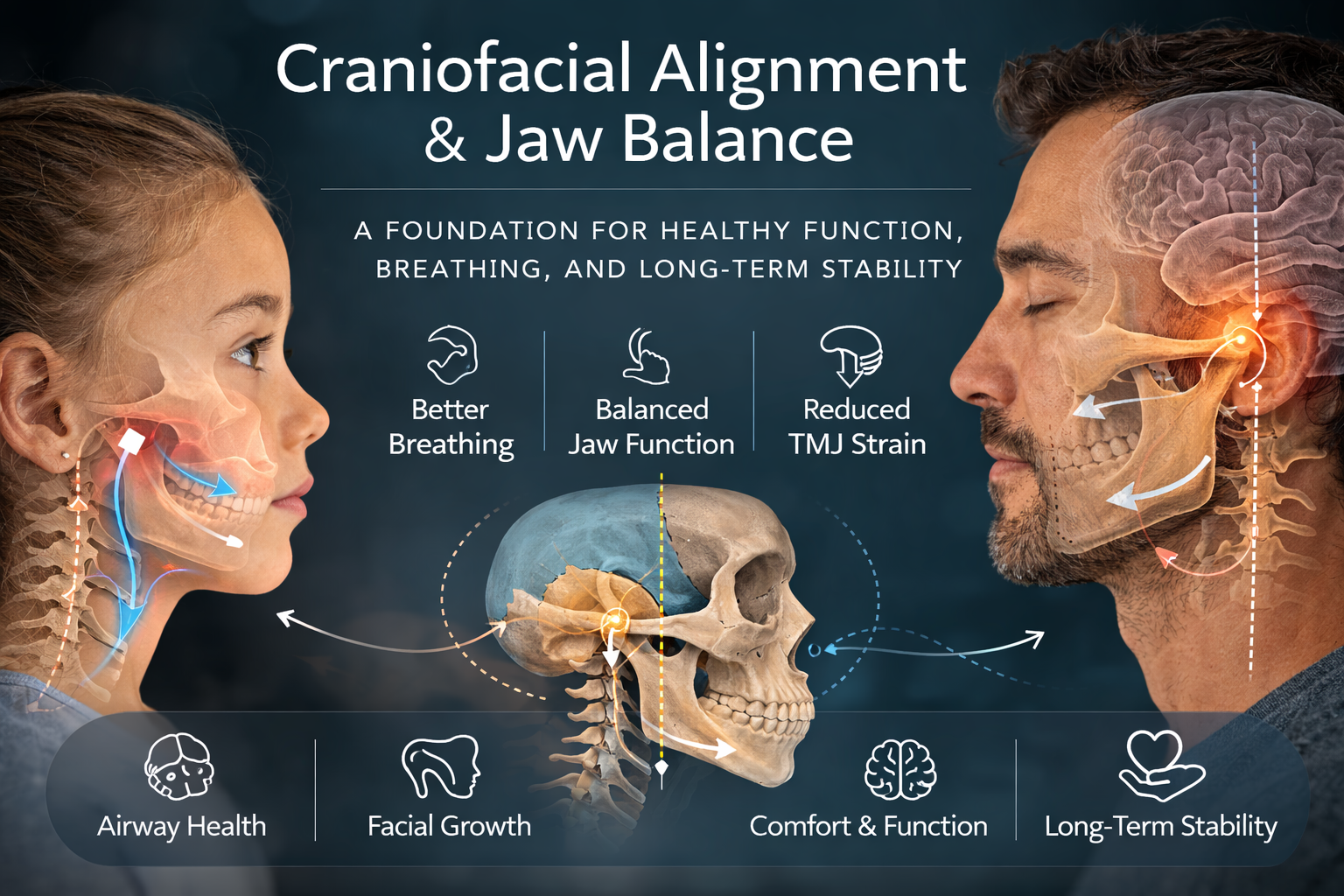
Craniofacial alignment describes how the upper jaw, lower jaw, and surrounding cranial structures relate to one another. When these structures are balanced, the teeth can function more naturally, the jaw can move comfortably, and the airway can develop properly. By evaluating jaw balance and craniofacial alignment, we can often identify underlying structural factors that may contribute to bite problems, TMJ discomfort, or airway concerns, helping guide treatment toward more stable and long-term results.
Why craniofacial alignment matters
Many dental treatments focus primarily on the teeth, but the teeth are supported by the jaws, and the jaws are influenced by the surrounding cranial structures. When the upper jaw (maxilla) is not ideally aligned with the cranial base, the bite may not function as efficiently and dental treatments may be less stable over time.
By evaluating craniofacial alignment, we can better understand how the jaws relate to the rest of the facial structure. Addressing these foundational relationships can help create a more stable starting point for treatments such as orthodontics, guided growth, airway therapy, or bite reconstruction.
jaw balance and tmj health
The temporomandibular joints (TMJ) connect the lower jaw to the skull and allow the jaw to move during speaking, chewing, and swallowing. When the jaws or surrounding cranial structures are not balanced, additional strain may be placed on these joints and the muscles that support them.
This imbalance can contribute to symptoms such as jaw discomfort, clicking or popping of the joints, headaches, facial tension, or difficulty chewing. By evaluating jaw balance and craniofacial alignment, we can often identify structural factors that may be contributing to TMJ stress and guide treatment toward improved comfort and function.
a foundation for airway and orthodontic care
Craniofacial alignment can also play an important role in breathing and facial development. The position of the upper jaw influences the shape of the dental arches, the development of the face, and the space available for the airway.
When alignment is evaluated before treatments such as palatal expansion, orthodontic development, or airway therapy, it can help create a more balanced starting point for care. This approach supports treatments aimed at improving breathing, facial growth, and long-term stability of the bite.
Who can benefit from craniofacial alignment evaluation
Both children and adults can benefit from an evaluation of craniofacial alignment. For children, early assessment may help guide facial development and support healthier breathing patterns as they grow.
For adults, evaluating jaw balance can help identify structural factors that may contribute to TMJ discomfort, bite instability, airway concerns, or challenges with previous orthodontic treatment. Understanding these relationships allows treatment to be planned with the broader craniofacial system in mind.
signs your jaw may be out of balance
When the jaws and surrounding cranial structures are not ideally aligned, the effects can sometimes be seen in both facial appearance and everyday function. Many people live with these signs for years without realizing that jaw balance may be contributing to the problem.
Functional Symptoms
Jaw clicking, popping, or discomfort
Frequent headaches or facial tension
Difficulty chewing or an uneven bite
Teeth that wear unevenly or shift over time
TMJ discomfort or jaw fatigue
Airway and Breathing Concerns
Mouth breathing or difficulty breathing through the nose
Snoring or disrupted sleep
Feeling unrested after sleep
Visible or Structural Clues
Facial asymmetry
Uneven eyes or eyebrow position
One ear appearing slightly higher than the other
A jaw that appears shifted to one side
A chin that does not appear centered with the face
Smile and Esthetic Signs
A smile that appears tilted or crooked
Uneven gum display when smiling
Teeth that appear slanted relative to the face
A smile that does not appear level with the eyes
These signs do not always indicate a serious problem, but they can suggest that the relationship between the jaws and cranial structures may not be fully balanced.